Showing posts with label Albee Edward. Show all posts

Wednesday, September 17, 2008

Ενα παγκάκι στο Μπρόντγουεϊ

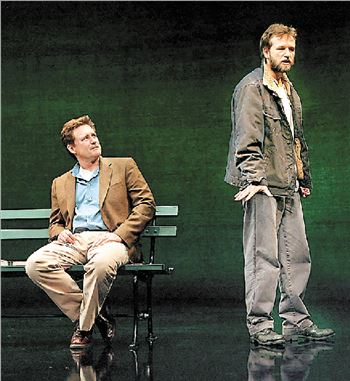
Φωτογραφία
Ο Μπιλ Πούλμαν (αριστερά) και ο Ντάλας Ρόμπερτς σε σκηνή από το «Ρeter and Jerry», εισαγωγική πράξη στην παράσταση «Τhe Ζoo Story», στο θέατρο Second Stage το φθινόπωρο του 2007
ΝΕΑ ΥΟΡΚΗ. Στο κέντρο του Μανχάταν, στο θέατρο Second Stage, συνεχίζεται με μεγάλη επιτυχία η «ενισχυμένη» εκδοχή του έργου «Τhe Ζoo Story» του διασημότερου εν ζωή θεατρικού συγγραφέα Εντουαρντ Αλμπι (τον περασμένο Μάρτιο, μερικούς μήνες μετά την πρεμιέρα της παράστασης, έγινε 80 ετών).

Στο πρωτότυπο μονόπρακτο, το οποίο γράφτηκε το 1958, πρόσθεσε μια εισαγωγική πράξη με τίτλο «Ηomelife» και το έργο μετονομάστηκε «Ρeter and Jerry», όπως ονομάζονται οι δύο ήρωες. Στο νέο κείμενο παρουσιάζεται η πρωθύστερη ζωή του Πίτερ, ενός μεσοαστού οικογενειάρχη.

Αλλά βεβαίως και αυτό το έργο, όπως και όλα τα έργα του Αλμπι (30 εν συνόλω), καταπιάνεται με το κεντρικό ερώτημα που ταλανίζει τον συγγραφέα: τι ενώνει τους ανθρώπους και τι τους απομακρύνει. Η απομόνωση και η αλλοτρίωση. Εν ολίγοις, το μυστήριο της ανθρώπινης φύσης.

Δύο άγνωστοι, ο Πίτερ και ο Τζέρι, κάθονται σε ένα παγκάκι και πιάνουν την κουβέντα. Ο Τζέρι θέλει με το ζόρι να διηγηθεί στον τυχαίο συνομιλητή του την επίσκεψή του στον ζωολογικό κήπο. Η υπόγεια ειρωνεία και το σασπένς κλιμακώνονται όταν ο Πίτερ επιμένει ότι πρέπει να επιστρέψει σπίτι. Τον εν λόγω χαρακτήρα στην τωρινή παράσταση ενσαρκώνει ο Μπιλ Πούλμαν [τον έχουμε δει σε ταινίες όπως «Ημέρα Ανεξαρτησίας» και «Το μυστικό της μαύρης λίμνης» («Lake Ρlacid»)], ο οποίος έλαβε θριαμβευτικές κριτικές πρωταγωνιστώντας στο «Τhe Goat» (έργο του Αλμπι το οποίο κέρδισε βραβείο Τόνι το 2002).

Όταν ο Εντουαρντ Αλμπι παρουσίασε το «Τhe Ζoo Story» στους νεοϋορκέζους παραγωγούς, εκείνοι το υποδέχθηκαν με επιφυλακτικότητα. Ετσι, η πρεμιέρα πραγματοποιήθηκε στο Δυτικό Βερολίνο το 1959. Έναν χρόνο αργότερα παρουσιάστηκε στο νεοϋορκέζικο θέατρο Ρrovincetown Ρlayhouse, πλάι στην «Τελευταία μαγνητοταινία του Κραπ» του Σάμιουελ Μπέκετ. Ο ογδοντάχρονος κάτοχος του βραβείου Πούλιτζερ δήλωσε πρόσφατα στην εφημερίδα «Ιnternational Ηerald Τribune»: «Η δημιουργικότητα είναι μαγεία. Μην την εξετάζετε από πολύ κοντά».

TO BHMA, Πέμπτη, 18 Σεπτεμβρίου 2008

Sunday, March 30, 2008

Edward Albee... Καθώς πλησιάζει τα 80 του!


Edward Albee at his home in TriBeCa. (Sara Krulwich/The New York Times)

Ο Edward Albee, ο κυριότερος αμερικανός θεατρικός συγγραφέας της γενιάς του, έχει συγχύσει, έχει προκαλέσει και έχει δώσει κίνητρα στο θεατρικό κοινό για σχεδόν μισό αιώνα. Από την πρεμιέρα του πρώτου θεατρικού έργου του, «Η ιστορία του ζωολογικού κήπου» [The Zoo Story, 1959] μέχρι την πιό πρόσφατη παραγωγή του στο Broadway, «Η γίδα» [The Goat, 2000], ο Ε. Albee έχει μελετήσει αφειδώς τα θέματα που αφορούν στα θεατρικά έργα τα όχι τόσο δημοφιλή: η ικανότητα για το σαδισμό και βία μέσα στην αμερικανική κοινωνία, το ευμετάβλητο της ανθρώπινης ταυτότητας, ο επικίνδυνος παραλογισμός της σεξουαλικής έλξης και, πάντα, η αδιάψευστη παρουσία θανάτου.

Γεννημένος το 1928 στην Ουάσιγκτον, ο Ε. Albee «έφτιαξε» αρχικά το όνομά του με τα έργα «Το κουτί με την άμμο» [The Sandbox, 1960] και «Το αμερικανικό όνειρο» [The American Dream, 1961] - που τον συνέδεσαν με το ευρωπαϊκό θέατρο του παραλόγου. Αλλά το έργο που του έφερε τη διεθνή αναγνώριση ήταν ένα ρεαλιστικό πορτρέτο του γάμου ως πεδίου μάχης, «Ποιος φοβάται την Βιρτζίνια Γουλφ;» [Who's Afraid of Virginia Woolf? 1962], που είχε «σκανδαλώδη» επιτυχία και στο θέατρο αλλά και (το 1966) στον κινηματογράφο.

Ενώ δεν έφτασε ποτέ τη δημοφιλή απήχηση της «Βιρτζίνια Γουλφ», όλα τα καλύτερα έργα του Ε. Albee είναι ξεχωριστά για το διανοητικό εύρος και την ακονισμένη κομψότητα της γλώσσας τους. Περιλαμβάνουν τα έργα «Η μικρούλα Άλις» [Tiny Alice, 1965], Ευαίσθητη ισορροπία [Α Delicate Balance, 1966], και «Τρεις ψηλές γυναίκες» [Three Tall Women, 1994]. Ο Ε. Albee έχει τιμηθεί τρεις φορές με το Βραβείο Pulitzer. -- Ben Brantley

Ta-ta! Give ’Em the Old Existential Soft-Shoe

Sara Krulwich/The New York Times

Symmetry, yes, but logic? From left, Tyne Daly, Brian Murray, Michael Esper, Colin Donnell and Charlotte Parry in “Me, Myself & I.”

Published: January 28, 2008, The New York Times
PRINCETON, N.J. — As he approaches his 80th birthday, Edward Albee, that most distinguished of American dramatists, is being seriously silly. Or is it sillily serious? Sillily — that can’t be right. Isn’t that one of a group of islands off the coast of England? Or do I mean the ingénue from “The Importance of Being Earnest”? Am I making any sense at all?

If you spend a couple of hours in the giddy company of “Me, Myself & I,” the new play at the McCarter Theater Center here, you’ll start thinking this way too. Anyone who sees Mr. Albee’s latest effort, which stars a riotous Tyne Daly as the existentially bewildered mother of identical twins, should expect to have verbal vertigo for at least 24 hours after the show.

The multi-Pulitzer-Prize-winning author of thesis-generating works like “Who’s Afraid of Virginia Woolf?” and “A Delicate Balance” is celebrating his four-score years on earth with a laugh-out-loud little farce in which the meanings of everyday words split and multiply like amoebas on steroids. That includes, by the way, all personal pronouns and proper names... [συνέχεια ΕΔΩ].

Wednesday, February 20, 2008

Edward Albee and Tom Stoppard: Playing on words


Edward Albee, left, and Tom Stoppard (Sara Krulwich/The New York Times; Tony Cenicola;The New York Tim)

By Ben Brantley, International Herald Tribune, February 20, 2008

Do you know what it's like to be deeply, unbearably in love, all the while aware that you can never completely trust the object of your affection? I would wager that Edward Albee and Tom Stoppard do, almost to the point of delirium.

Don't misunderstand me. I have no intimate acquaintance with the personal lives of these dramatists. It's just that their ruling passion, jubilant and exasperated, proclaims itself publicly in pretty much everything they write, including their new plays of this season ("Rock 'n' Roll" from Stoppard, and "Homelife" and "Me, Myself & I" from Albee).

How could it be otherwise, when it's the most basic tools of their trade that they so adore? The faithless lovers of Tom Stoppard and Edward Albee are, in a word, words. Or to quote one of the interchangeable title characters in "Rosencrantz and Guildenstern Are Dead," the 1966 play that made the young Stoppard famous: "Words, words. They're all we have to go on."

It is one of the livelier paradoxes of the English-speaking theater today that its two most dazzling wordsmiths are incurably suspicious of the language they ply with such flair. No other living playwrights give (and, it would seem, receive) more pleasure from the sounds, shapes and textures of their lavishly stocked vocabularies. And none is more achingly conscious of the inadequacy of how they say what they say.

This contradiction is not just an element of their style; it's the essence of it. It's what gives that distinctive, heady tension to their plays, the friction that sends the minds of receptive theatergoers into exhilarated overdrive. It is also what makes actors say that mastering these playwrights' ornate, fast-footed language requires the sort of hard study demanded by Shakespeare... [περισσότερα ΕΔΩ]